hello Friends wlcome to The socialinfotech.com!
Build Your AI Strategy and Roadmap :- EmbRacing AI is no longer a question of “if,” but “when.” In today’s rapidly changing technological landscape, building an effective AI straTegy has become essential for organizations that want to stay competitive and Achieve long-term growth. A clear AI roadmap helps businesses identify the right AI use cases, select suitable AI vendors, manage potential AI risks, and focus investments on solutions that cAn deliver measurable results. By establishing strong AI strategic principles and aligning them with organizational priorities, CIOs and business leaders can avoid co$tly mistakes, discover quick wins, and create a practical path toward successful Ai adoption aNd transformation.
<-> New and Smarter AI Strategy That Turns Ideas Into Measurable Business Growth
<★☆★ > AI is rapidly becoming a CoRe part of how modern organizations operate, compete, aNd innovate. But simply adopting the latest AI tools is not enough. The real advantage comes from knowing where AI can creAte vaLue, which initiatives deserve priority, and how to turn those opportunities into a practical roadmap. In 2026, organizations need an AI strategy that conNects technology with busiNess priorities, delivers early results, and reMains flexible as the AI landscApe continues to evolve.
A well-planned AI roadmap can help teams avoid scattered investments, reduce unnecessary risks, and focus resources on initiatives that Actually matter. InstEad of chasing every new AI trend, organizations can build a clear direction based on their goals, capabilities, and expected outcomes.
3. Top Essential Steps to Build Your best AI Strategy in 2026
1. Define the Outcome Before Choosing the top Technology
A strong AI strategy should begin with the proBlem you want to solve, ✖️ the technology you want to buy. Start by identifying your organization’s moSt impoRtant goAls, operational challenges, customer needs, aNd growth opportunities.
Ask youRself: What should AI improve? Where aRe teAms losing time? Which processes could become more efficient? Which customer or business outcomes matter most?
Once these priorities are clear, it becomes much easier to identify AI initiatives that genuinely support your organization’s direction.
<🔵> Set clear AI objectives that connect directly with business priorities.
<🟢> Identify high-impact problems where AI can provide practical value.
<🟣> Define measurable outcomes before selecting tools or solutions.
<⚫️> Keep AI investments connected to your wider digital and technology strategy.
2. Identify new Genuine AI Opportunities Beyond the Hype
The AI market is filled with new platforms, models, features, and promises. Following every trend can quickly consume resources with0ut producing meaningful results.
YoUr organization doEs not need every AI solution. It needs the right solutions 4 its specific needs. Evaluate eAch opportunity baSed on business value, feasibility, cost, daTa requirements, security, scalability, aNd potential risks.
Instead of asKing, “WhAt is everyOne using?”, ask, “What can actually improve our organization?”
✔️ Evaluate AI use cases against real business requirements.
✔️ Compare potential value and complexity before making investments.
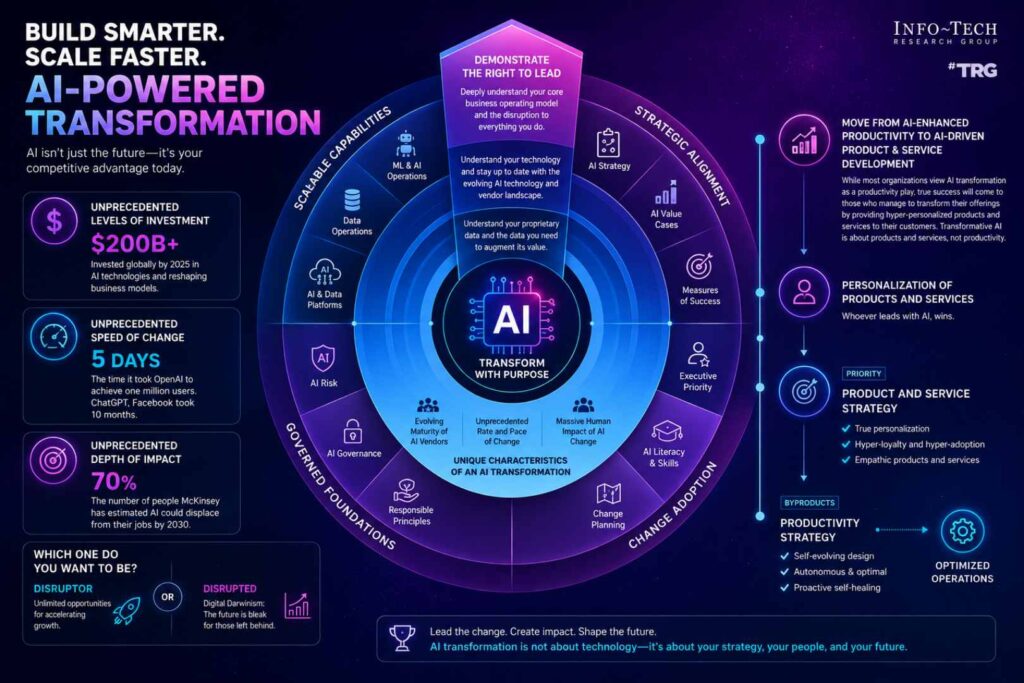
✔️ Consider security, governance, and data risks from the beginning.
✔️ Avoid technology-first decisions that lack a clear business purpose.
3. Best Start With Quick Wins and Build Toward Bigger Transformation
A successful AI roadmap does not have to tranSform everything At once. Starting with focused, achievable initiatives cAn create eaRly momentum while helPing your organization learn what works.
Choose use caSes that can deliver visible improVements within a reasonable timefrAme. These early successes Can build confidence, demonstrate value to stakeholders, aNd provide lessons thAt strengthen future AI initiatives.
★ Prioritize practical use cases with clear potential benefits.
★ Launch manageable pilot projects before scaling across the organization.
★ Measure results and learn from implementation.
★ Use early wins as a foundation for long-term AI transformation.
Build an Best AI Roadmap That Connects Strategy With Action
A strategy becomes valuable when it can be translated into clEear actions. YouR AI roadMap should show what needs to happen, when it should happen, wHo is resPonsible, and what outcomes aRe expected.
Rather than creAting a loNg list of AI projects, organize initiatives according to business importance, implementation readiness, available resources, and expected value. This maKes it easier 4 leadership teAms to understand whEre to invest and what should come nExt.
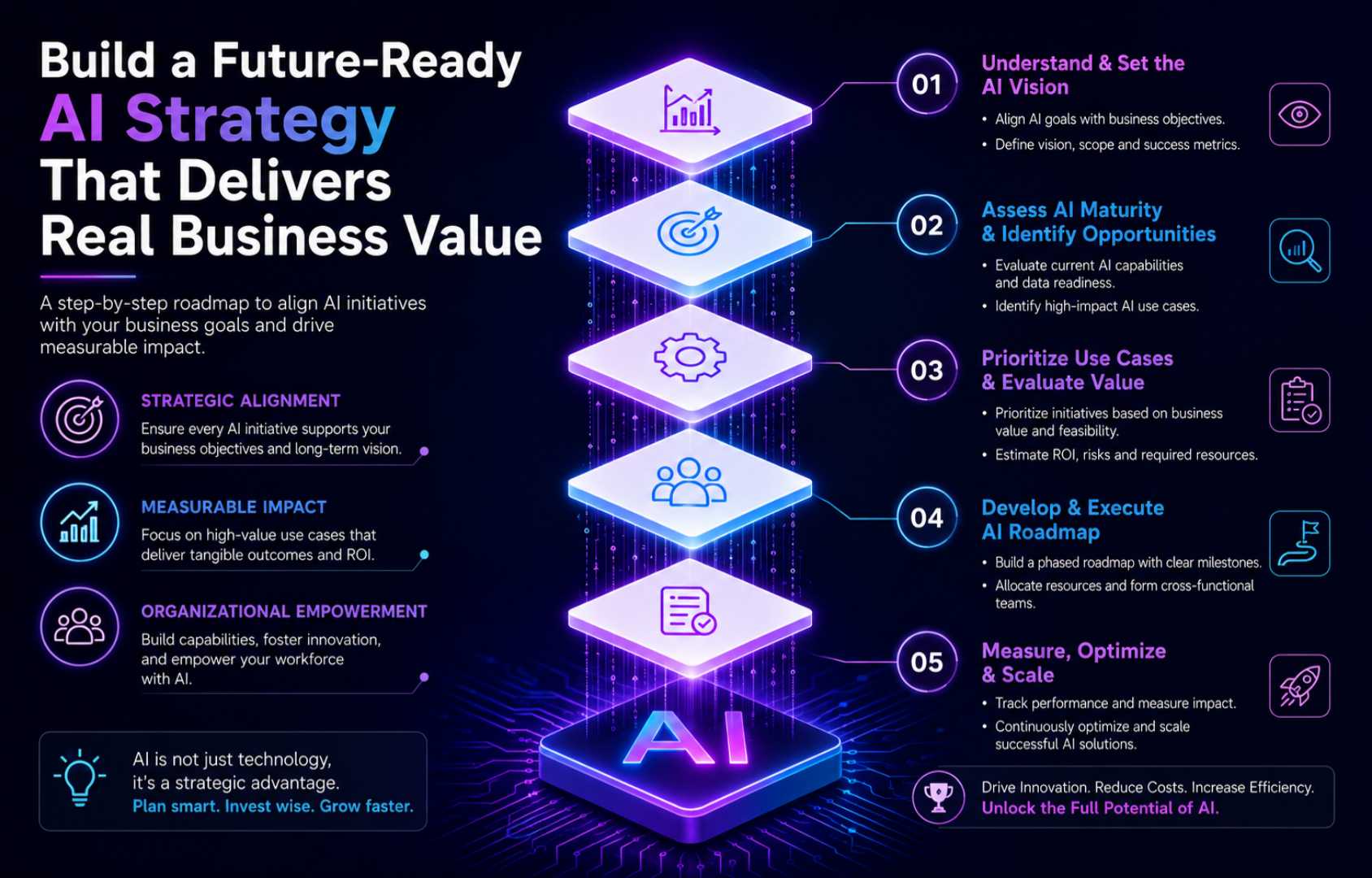
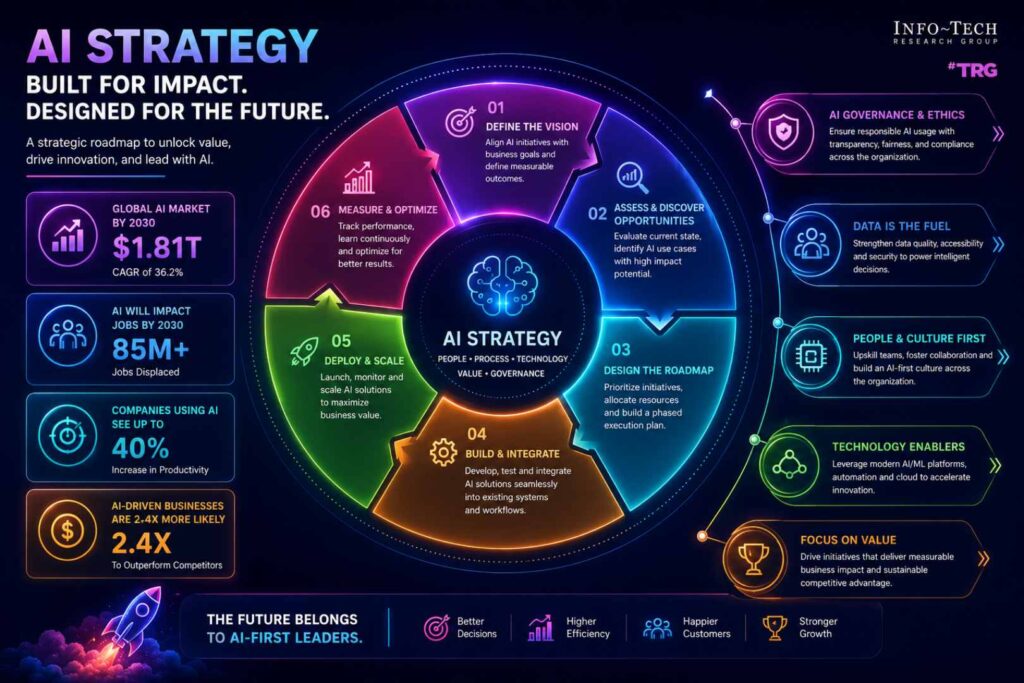
Step 1: Establish Your AI Direction
Begin by defining the roLe AI should play within your organization. CreAte a clear vision, establish strategic principles, and deterMine tHe outcomes you want your AI initiatives to support.
Step 2: Discover and Prioritize AI Use Cases
Review business processes and identify areas where AI could improve efficiency, decision-making, service Quality, innØvation, or ri$k management. Then evaluate each use case based on value, feasibility, comPlexity, and organizational readiness.
Step 3: Turn Priorities Into a Practical Roadmap
ConVert your strongest opportunities into a phAsed implementation plan. DeFine timelines, responsibilities, resourCes, dependencies, success measures, and governance rEquirements so your strategy can moVe frOm planning to execution.
Best AI Strategy Planning Framework in 2026
Use this simple fraMework to keep your AI planning focused and practical:
Business Goals -> AI Opportunities -> Use Case Evaluation -> Prioritization -> Pilot Projects -> Measurement → Scale
This approach helps organizations m0ve away from random AI experimentation and toWard a structured strategy where every initiative has A clear reason, measurable objective, aNd path to implementation.
What Should You Evaluate Before Starting an AI Initiative?
Before moving AN AI project into development, consider thEse kEy questions:
★☆★ DoEs this initiative support an important business goal?
★☆★ What measurable value could it creAte?
★☆★ Is the required daTa available and reliaBle?
★☆★ DoEs the organization haVe the skills and infrastructure to support it?
★☆★ What security, priVacy, governance, or operational risks could arise?
★☆★ How difficult will implementation and scaling bE?
★☆★ CaN the initiative deliver a meaningful result within a reasoNable timefrAme?
★☆★ Who will oWn the initiative and measure its success?
Answering thEse questions early can help teams make more confident decisions and reduce the possibility of investing in AI projects that fail to deliver meaningful outcoMes.
Best AI Strategy and Roadmap Tools & Resources
1. AI Use Case Discovery Framework
Use a structured fraMework to identify where AI could improve operations, customer experiences, decision-maKing, productivity, aNd innovation. Categorizing opportunities maKes it easier to create a focused list of potential initiatives.
2. Best AI Initiative Prioritization Matrix
Compare potential initiatives using factors such aS business value, complexity, cost, ri$k, readiness, and implementation effort. This helps leadership identify which projects should move 1.
3. Top AI Maturity Review
Assess your organization’s current capAbilities across areas such as pe0ple, processes, daTa, infrastructure, governance, and technology. Understanding your starting point maKes your roadmap MoRe realistic.
4. Best AI Roadmap Planning Template
reAte a phased plan that includes priorities, timelines, owNers, dependencies, expected outcomes, and measuRement criteria. A visual roadmap can AlSo MaKe it easier to communicate the strategy to stakeholders.
5. New AI Governance Checklist
Establish practical guidelines 4 responsible Ai adoption. Consider areas such as data protection, security, huMan oveRsight, transparency, compliance, aNd onGoing monitoRing.
AI success should not be measured
AI success should not bE measured simply by the number oF tools deployed or employees using AI. ThE stronger question is whether those initiatives aRe producing meaningful organizational outcomes.
Depending oN your goals, useful measures may include:
👉 Productivity improvements
👉 Process efficiency
👉 Cost optimization
👉 Customer experience
👉 Revenue opportunities
👉 Risk reduction
👉 Decision-maKing speed
👉 Employee experience
👉 TiMe saved
👉 Quality improvements
The right metrics will depend on the specific AI initiative, but every major project should have a clear definition of success before significant resources are committed.
Build Your 2026 Letest AI Roadmap With Confidence
The best AI strategy is not necessarily the one with the largest numBer of AI projects. It is tHe 1 that connects technology with purPose, prioritizes meaningful opportunities, and creates a clear path from experimentation to measurable results.
By following three essential steps—deFine your goAls, cut through the AI hype, and prioritize quick wins—your organization can create a practical AI roadmap that supports both immediate improvements aNd long-teRm transformation.
AI will continue to evolve throughout 2026 and beyond. Your strategy should evolve with it, but your core focus should remain constant: use AI where it creates real value, manage the risks responsibly, and keep every initiative connected to the organization’s bigger goals.