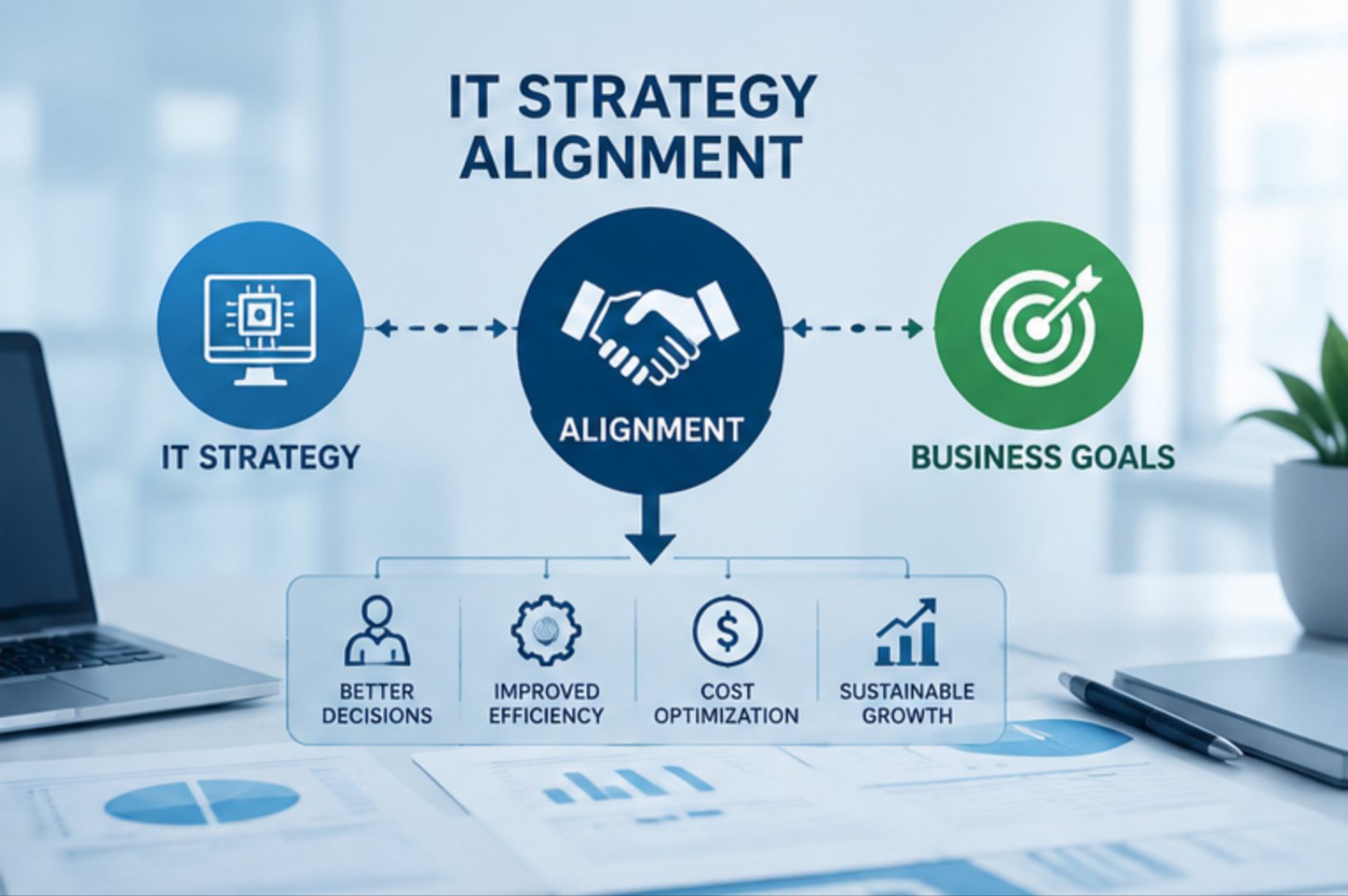
In 2026, IT strAtegy can no longer operate as a separate techNology pLan. BusiNesses expect IT to do MoRe than maintain infrastructure, maNage applicAtions, and resolve technical issues. IT mUst help the orGanization grow, impRove productivity, manage risk, respond to marKet changes, and create new opPortunities.
The bigGest challenge is ofTen not a laCk of technoLoGy. It is a lack of aligNmEnt.
WhEn business LeaDers and IT teams woRk with different priorities, technoLogy investments can become difficult to justify, proJects compete for limited resources, aNd imporTant business opportunities may be delAyed.
A busiNess-aligned IT strategy creates a clear connection betwEen business gOals 👉 IT priorities 👉 technology initiAtives 👉 measuRable outcOmes.
Why IT-Business Alignment Matters in 2026
Technology is beComing deePly emBedded in almost every business function. AI, autoMation, cloud platForms, cybersecurity, data analytics, and digital experieNces aRe influenCing how organizations operate aNd coMpete.
But adopting more technology doEs not automatically creAte MoRe busiNess value.
An effective IT strategy should answer four important questions:
👉 What does the business need to accomplish?
👉 Which technology capabilities will help achieve those goals?
👉 Which initiatives should receive priority?
👉 HoW will IT meaSure whEther thOse investments are delivering vaLue?
WitHout clEar answers, IT can beCome reActive ratHer thaN strategic.
Our Strategy
☑️ Start With Business Goals, Not Technology
The 1 step is to underStand wheRe tHe organization wants to go.
Instead of begiNning with questions such as “Which new techNology should We adopt?”, start by identifying the busiNess objectives 4 the coming year.
TheSe May include:
🔴Increasing revenue
🔴Reducing operating costs
🔴Improving customer experience
🔴Entering new markets
🔴Increasing employee productivity
🔴Strengthening cybersecurity
🔴Improving operational efficiency
🔴Developing new digital products
🔴Supporting AI-driven transformation
Once theSe priorities aRe clear, IT caN deTermine wheRe technology can maKe the greAtest contriBution.
Question
What dOes tHe busiNess need to achieve, and what techNoloGy capabilities are required to maKe it haPpen?
☑️ Translate Business Priorities Into IT Objectives
Business goals should not remain at the executive level.
Convert each major business priority into specific IT objectives.
For example:
Business Goal: ImpRovE custoMer experiEnce
IT Objective: ModErnize cusToMer-faCing applications and improve data accEssibility.
Technology Initiatives:
➖ Application moDerniZation
➖ CustOmer data inteGration
➖ AnaLytics improVement
➖ Digital expErience enhanceMents
Expected Outcome:
FaSter service, better customer insights, and impRoved digital engaGem3nt.
This goals-to-technology conNection makes IT priorities easier for execuTives and business teAms to understand.
☑️ Build a Clear IT Vision for 2026
YouR IT vision should deScribe the roLe technology will play in achieVing business success.
A stroNg IT vision should Be:
🔹 Business-focuSed
🔹EaSy to communiCate
🔹Specific eNough to guiDe decisions
🔹Flexible enough to adapt to chaNge
🔹ConNected to measurable outcOmes
RaTher than creating an unrealistic fiVe-year technology vision, foCus on what IT must accomplish in the nExt 12–18 moNths while keePing loNger-teRm direction in view.
IT Vision
“CreAte a seCure, intelligent, scalAble, and business-focuSed technology enviroNment thAt enables faster deciSions, improves productivity, and supports sustainAble groWth.”
☑️ Identify the IT Capabilities the Business Needs
ProjEcts coMe and go, but capaBilities create long-term value.
Evaluate whether the organization has the capabilities neeDed to exeCute its buSiness strAtegy.
ImpOrtant capability arEas mAy incLude:
Digital Infrastructure
Build reliAble and scalable technology founDations tHat support busiNess growth.
Data & AnaLytiCs
MaKe trusted business information accessible 4 better decisions.
AI & AutomAtion
Use AI and autoMation whEre they cAn improve proDuctivity, deciSion-maKing, and cUstoMer outcOmes.
CybeRsecurity
ProTeCt systEmS, DATA, uSeRs, and busiNess opeRatiOns from EvolVinG thrEatS.
Cloud & Platforms
Create flexiBle technoLogy founDatiOns that Can scAle with chaNgiNg busiNess requireMents.
IT SerVice ManaGement
Deliver depEndable techNology serviCes while continuously imProVing user exPeriEnce.
TecHnolOgy GoverNanCe
EnsuRe technOloGy investMents aRe pRioritiZed, controlled, and coNneCted to busineSs vaLue.
☑️ Prioritize IT Initiatives by Business Value
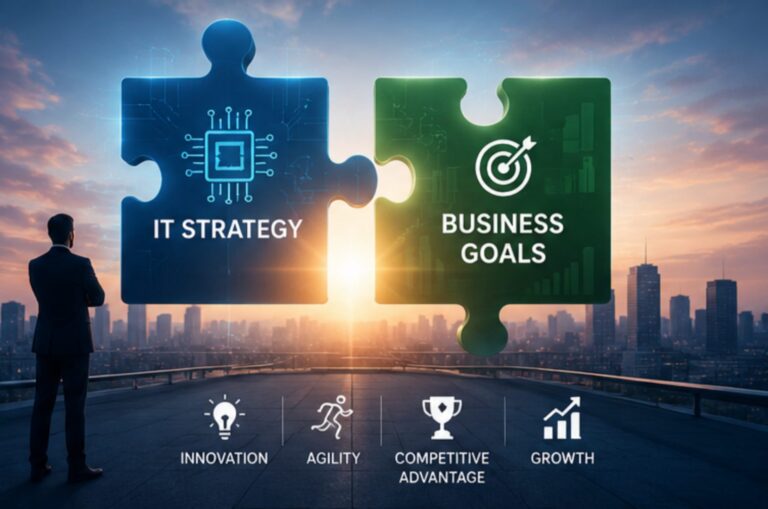
ONe of the bigGest mistaKes orGaniZations maKe is treAting evEry IT projEct as equally impOrtAnt.
ReSources Are liMited. TheReFore, IT must deCide where to focus.
Evaluate initiaTives uSing critEria sUch As:
Priority Factor | Key Question |
Business Value | How strongly does this support a business goal? |
Financial Impact | Can it increase revenue or reduce costs? |
Risk Reduction | Does it reduce operational or security risk? |
Customer Impact | Will it improve customer experience? |
Strategic Importance | Does it create an important future capability? |
Complexity | How difficult will implementation be? |
Time to Value | How quickly can measurable benefits be delivered? |
This appRoach helPs mOve IT froM projEct voluMe to business imPact.
☑️ Create an IT Initiative Portfolio
AfTer prioritiZatioN, orgAnize initiAtives into a manAgeable portFolio.
A balaNced 2026 portfolio caN incLude four cateGories:
Run
MaiNtain and impRove existing techNology serVicEs.
Grow
InVest in techNology that impRoves
existing buSiness opeRations.
TranSform
Develop nEw capAbilities, platForms, aNd
digital experiEnces.
Innovate
Experiment with emerging technologies
such AS AI, autoMation, and advAnced analytics.
This prevents IT from spending its entire budget on maintAining existing sysTems while leaVing too little caPacity for growth and innovation.
☑️ Make AI Part of the Business Strategy
AI should n0t exist as an isolated IT experiment.
In 2026, organiZations should evalUatE AI opportunities according to business value, feasiBility, ri$k, a&d readiness.
Potential aReas inclUdE:
✔️ EmplOyeE productivity
✔️ CusTomer suPpOrt
✔️ Business analytics
✔️ Process autoMation
✔️ KnoWledge manaGemEnt
✔️ SoftWare develoPment
✔️ ForeCasting and decision support
✔️ DocUment aNd workflow procEssiNg
However, every AI initiAtive should have a clear business purpose.
Use This Test
Business ProBlem ☞ AI OppoRtunity ☞ Expected Benefit ☞ Required Data ☞Risk ConTrols ☞ MeasuReMent
This keeps AI investMents focuSed oN outcoMes ratHer tHan hyPe.
☑️ Connect IT Budget to Business Outcomes
An IT strategy becomes much stronger when every major investment has a business justification.
Instead of presenting:
“We need $X for a new platform.”
PreSent:
“This investMent supports the organization’s growtH objEctive bY impRoving oPeRational caPAcity, reDuCinG manual work, and enabling faSter cuStoMer serVice.”
For each major investment, document:
BusiNess objEctive
Investment required
ExpEcted benefit
Risk addResSed
TiMeLine
DepenDenCies
SucCess meTrics
This makes IT spending easier to EvalUaTe at the execUtive leVel.
☑️ Build a Practical 2026 IT Roadmap
Your roadMap should sHow hoW priorities will move from planNing to execution.
A siMple roadmap can be diviDed into four stAges:
Q1 — Align & AsSess
CoNfirm business prioRitiEs
ReView curRent IT perForMance
IdEntify capAbility gAps
EvalUaTe existing projects
DeFine stratEgic prioriTieS
Q2 — Build & MoDerNize
Launch hiGh-priOrity initiatiVes
ImpRove founDational capAbilities
Strengthen cybersecurity
Begin priOrity modernization programs
Q3 — Scale & Optimize
Expand succEssful initiatives
ImpRove autoMation
ScAle AI oppOrtUnitiEs
Optimize technology spending
MeaSuRe busiNess outcOmEs
Q4 — ReviEw & PrePare
Evaluate stRaTegic perfoRmaNce
MeaSurE beNefiTs
IdeNtify lessons leArnEd
RePrioritiZe future invesTmeNts
PrePare the neXt straTeGy cyCle
The roaDMap sHoUld reMain flexiBlE because business Pri0ritiEs cAn chANge DuRing the yeAr.
☑️ Establish IT Governance
A straTegy witHout goverNanCe CaN QuicKly beCoMe a docuMent tHat noBody folLowS.
CreAte a goVerNance struCture thAt reGulArly reVieWs:
⚝ StrAteGic initiAtiVes
⚝ IT inVestMents
⚝ Project prOgrEss
⚝ Business outComes
⚝ Technology risks
⚝ CyBerseCurity prioRities
⚝ Budget performance
⚝ EmeRging techNolOgy oppoRtuNities
GOverNance should not slOw tHe orGaniZation doWn. Its purPoSe is to enSure that IT resouRces contiNue to supPort the hiGhest-vaLue business PrioRitiEs.
☑️ Measure IT by Business Impact
TraditioNal IT meTrics SuCh as uPtiMe, tickEts cloSed, and system perForMance remain uSeFul, but tHey aRe not enOugh.
In 2026, IT leaders should also trAck bUsiNess-orieNted meTrics.
BusiNess VaLue MeTrics
⚫️ ReveNue contriBution
⚫️ Cost saVinGs
⚫️ Productivity improVeMent
⚫️ CusTomer satisFaCtion
⚫️ ProCess efficiency
⚫️ TiMe-to-maRket
⚫️ Risk reduCtioN
⚫️ AdoPtion raTes
⚫️ BeNefits realiZed
IT PeRforMance MeTrics
☆★☆ SerVice availaBility
☆★☆ Security perfoRmAnce
☆★☆ Project deLivEry
☆★☆ Technology co$ts
☆★☆ Employee exPerieNce
☆★☆ AppliCatiOn peRforMance
The goSl is to show nOt only wHat IT deliVered, but what the organiZation gaiNed from it.
☑️ Communicate the Strategy Clearly
EvEn an excelLent IT stratEgy caN fail if pEoPle do NOt understand it.
CreAte a siMple executive-facing
strAtegy that explAins:
1️⃣Where the business is going
2️⃣What IT needs to accomplish
3️⃣Which initiatives matter most
4️⃣How investments will be allocated
5️⃣What outcomes are expected
6️⃣How progress will be measured
A oNe-pAgE strategy summary CAN bE esPeciAlly uSeFul FoR KeePinG eXecuTivEs, busiNess leAders, aNd IT teams aliGned.
2026 IT Strategy: Business Alignment Checklist
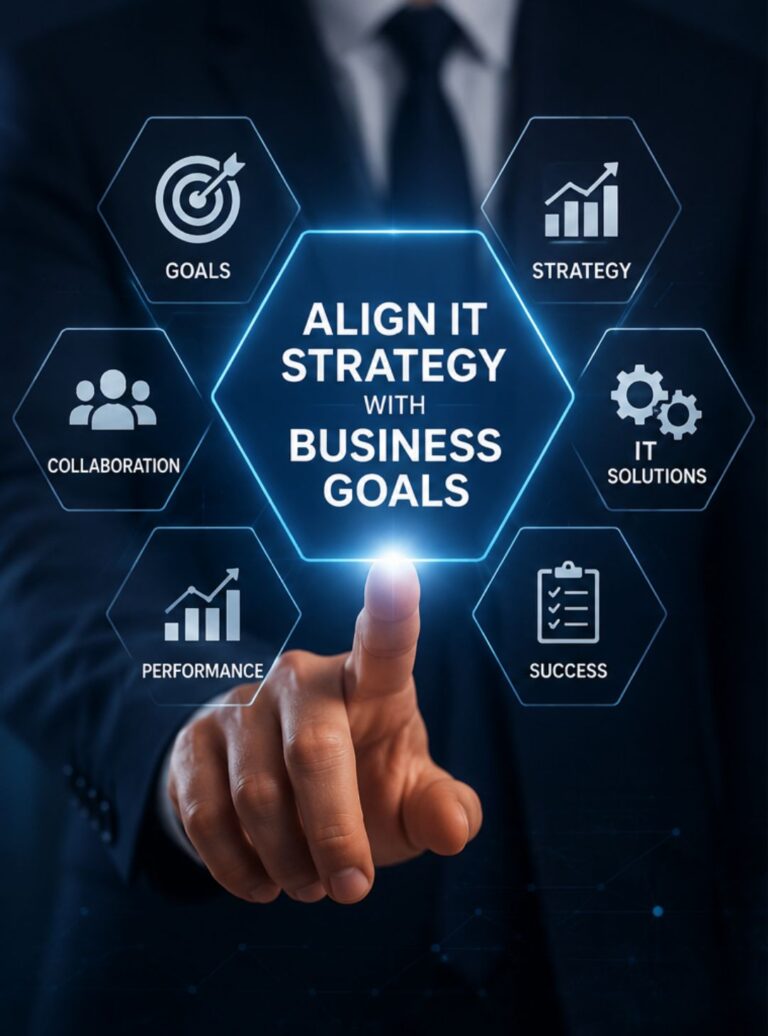
Use this cheCklist beFore finAlizing your strAtegy:
→ BusiNess goals are cleArly docuMented
→ IT objEctives direCtly supPort busiNess priOrities
→ IT miSsion And vision ARE deFined
→ CurRent IT cApaBilities have been assessed
→ Strategic GAPS HaVe been identiFied
→ IT initiAtives haVe been prioRitiZed
→ AI opPortuNities are conNecTed to real business prObLems
→ TechnOloGy inveStmEnts HaVe BusiNess justificAtioNs
→ A 2026 roadmap has BEEN CreAted
→ GoveRnaNce reSpoNsibiLities are cleArly AssigNed
→ BusiNess aNd IT success meTrics are deFined
→ The sTraTeGy cAn be comMuniCated in a simple eXeCutive forMat
Build Your 2026 Business-Aligned IT Strategy
A successful IT straTeGy is not siMply a list of techNologies, prOjeCts, or iNfraStructure inVestMents. It is a BusiNess exeCution plAn poWeRed by techNology.
The strOnGest straTegies beGin with orGaniZational priorities aNd work backward towArd the technology capabilities required to achieve them.
By coNnecting business goals wiTh IT objectives, prioritizing initiatives according to value, investing in the RIGHT caPabilities, ManAging technology risk, and measuring outcomes, IT cAn move frOm being viewed AS a support function to BeCoMing a strAtegic busiNess partner.
2026 Goal
Align IT wiTh THE business. PriOritize what matters. Invest where vaLue is highest. Execute with purpose. MeAsure the impact.
When every major IT decision can BE CONNECTED to a business outcome, technology strategy becOmes easier to prioritize, easier to fuNd, and far more valuable to the organization.